
Sermon
The Salt and the Light
February 8, 2026
The Fifth Sunday after the Epiphany
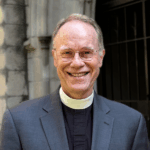
Sermon Transcript
Jesus said, “You are the salt of the earth … You are the light of the world. A city built on a hill cannot be hid. … Let your light shine before others, so that they may see your good works and give glory to your Father in heaven.” (from Matthew 5:13ff)
Recently, I was looking through some books on one of my shelves and came across a volume called Character is Destiny, by the late Senator John McCain. In one chapter, he tells the story of a French Canadian general named Romeo Dallaire. In 1994, Dallaire was the commander of a small United Nations peace-keeping force in Rwanda, the tiny African nation with long-simmering ethnic tensions between the Hutu and Tutsi people. Chaos threatened to erupt at any moment.
In hopes of averting a massacre, an informant from the Hutu government secretly came to Dallaire and warned that his own people – the Hutus – were planning to exterminate the Tutsis. They had stockpiled the weapons to commit genocide. What is more, the informant revealed to Dallaire the location of the weapons. Dallaire immediately began faxing U.N. headquarters for permission to raid the stash of weapons, and seize the instruments of murder from the hands of potential killers. He ended one fax with a plea: “Where there’s a will, there’s a way. Let’s go!”
Dallaire’s superiors denied permission, stating flatly that such intervention went beyond the peace-keeping mandate. No developed nation wanted to embroil itself in an African civil war. So the rest of the world essentially looked the other way as evil engulfed Rwanda. The genocide went on for one-hundred days. When it finally ended, nearly a million Tutsi people had been murdered. To this day Romeo Dallaire remains haunted by the experience. “We could have stopped it,” he declares.
Jesus said, “You are the salt of the earth … You are the light of the world. No one, after lighting a lamp, puts it under a bushel basket, but on a lampstand. What did Jesus mean when he used the metaphors of salt and light to describe his disciples? Was he giving them a compliment or a commission? If I were to come up to you later today and say, “You are the salt of the earth,” my guess is that though your brow might furrow a bit, you would generally take it as a compliment and utter a somewhat guarded, “thank you.” Likewise, if I were to greet you and say, “You are the light of the world,” you would stand taller and receive the words as high praise – though you might secretly be worried that I was exaggerating or being sarcastic. You are the salt of the earth. You are the light of the world. Is it a compliment? Or is it a commission? I believe that the answer is yes. The answer is both compliment and commission, with an emphasis on commission. If Jesus were, in fact, conferring on his listeners some lofty status, he was not intending it to be for their mere enjoyment. He was doing so because he had a purpose in mind for them. Salt and light have a purpose.
Since ancient times people have used salt for two general purposes: as a seasoning to bring out the flavor of food, and as a preservative against decay. It seems to me that salt’s use as a preservative was especially important, and may be what Jesus had in mind. In his time and place people lived close to the land. Meat and fish, unless consumed, would spoil quickly and become inedible. Modern methods of food preservation such as canning and refrigeration hadn’t been invented, and people knew nothing of microorganisms, nor how they break down organic matter. But they had discovered that salt greatly prolonged the shelf-life of the food. They didn’t know why, but salt held back the decay. Salt arrested the progress of death and decomposition, which is the devil’s work. Thus, salt participates in holiness. Salt is the essential ingredient in holy water, used in exorcisms. The devil doesn’t like salt. The devil likes rot. What have people done when they think the devil is behind them, tempting them to do wrong and rotten things? They throw a pinch of salt over their shoulder to drive the devil away. Granted, a fine line runs between the superstitious and the symbolic, but you see how the metaphor functions. You are the salt of the earth. You are to be a bulwark against the devil’s doings. Romeo Dallaire believed he had such a commission to be the salt of the earth in Rwanda.
You are the light of the world. The purpose of light hardly needs explaining, but the metaphor of light, coupled with Jesus’ words about salt, conveys to us a similar commission. Salt stops the rot, and light dispels the darkness. I think of the Hutu informant who came to Dallaire, to reveal the evil intentions of his government, and to shine light on the stash of weapons they were stockpiling for genocide. That man, whoever he was, whether he was a Christian or not, was living fully into Jesus’ commission: You are the light of the world. A city built on a hill cannot be hid. When Jesus first spoke these words, his Jewish hearers would have taken his reference to a city to mean Jerusalem, the city of God. To set Jerusalem in its prominent place, on a hill for all to see, would require them to be salt and light. For us, whether we be in Rwanda, Jerusalem, or New York City, our commission as followers of Jesus is the same: to be the salt and the light. It is to stop the decay, to repair the breech, to light the dark streets. Where there’s a will, there’s a way. Let’s go!
Hold on a minute! Not so fast. For one thing, you may feel completely inadequate to the task of holding back the evil powers of this world. You may feel underpowered to dispel the darkness of those who corrupt and destroy the creatures of God. What is more, reading Jesus’ words in the larger context of Matthew might only confirm your fears. Who is the salt of the earth and the light of the world? Well, it’s the same people to whom he spoke the Beatitudes: the poor in spirit, those who mourn, the meek, the persecuted, the reviled. Yes, you’ve got the peacemakers, the merciful, and those who hunger for righteousness in the lineup as well. But all in all, it’s hardly the world’s idea of a Super Bowl champion.
Also, the world-wide church is divided, hardly of one mind on anything. Salt and light, conservative and progressive impulses often have us pulling in opposing directions when the truth lies somewhere in the middle, as it usually does. Case in point, the Corinthians. The Corinthians were divided. Some years after the Apostle Paul had founded the new church in Corinth, the congregation had devolved into factions quarreling over personalities and practices.
How did Paul respond? With letters: lots and lots of letters. In fact, the Corinthians wound up with two whole books of the New Testament named after them. Let no one think receiving a letter from Paul was an honor. If Paul sent you a letter, it probably wasn’t to enthuse over how successfully you were following Jesus. Rather, you were likely in for a scolding for indulging in too much Eucharistic wine before the worship began, when no one was looking. In the portion of the letter we heard today (I Cor. 2:1-16), Paul wrote to remind them of what should come first in their life: For I decided to know nothing among you except Jesus Christ, and him crucified. Paul promised the Corinthians that if they sincerely set Christ and his cross at the heart of everything they did, God would give them the Holy Spirit. Then through the Holy Spirit, God would reveal to them what no eye has seen, nor ear heard, nor the human heart conceived. God would give them the mind of Christ to help them navigate their way through difficult, fractious times.
Some people say that God doesn’t care about the world. They say that if God exists at all and created the universe, then surely God just backed away and lets it unwind as it will. How else do you explain genocide? God allows nature, red in tooth and claw, to take its course. God doesn’t care. But if you and I are to believe that Jesus commissions us to be salt and light in the world, then we must conclude that God does care about how things unfold on this earth. Not only does God care, but God intervenes. In fact, God gets personally involved in breaking oppression, setting the captives free, housing the homeless, and clothing the naked. How? Does God tinker with the laws of nature? Is God given to the grand interventions that leave no doubt who’s in charge, and ensure that history goes the way he wants? I’m not putting any limits on God’s divine ability, but it seems to me that God most often chooses a different way.
God, who is Spirit, merges his Spirit with our spirits to raise up willing people to be salt and light and accomplish his purposes on earth. God sent the Spirit and raised up the prophet Isaiah to be salt and light and rail against the injustices taking place in Jerusalem, the city of God (Isaiah 58:1-12). God sent the Spirit and raised up the Apostle Paul to preach the Gospel to the Gentiles, and establish churches wherever he could travel. In First Corinthians again we hear Paul speak of how the Spirit commissioned him to do the work of God. Paul was hardly suited to be in anyone’s lineup of apostles. Yet the Spirit who searches everything, even the depths of God, searched him out too, and gave him supernatural ability to be the salt and the light.I believe the same Spirit of God was at work in the Hutu informant who was light, and in Romeo Dallaire who yearned to be the salt. We can only imagine how many lives would have been saved had the light been put on a lampstand, had the salt not been thrown out.
I believe the same Spirit of God is at work today, seeking to raise up willing servants in you and me to be the salt and the light. It is why we pray, why we receive the Sacrament, why we read and study the Scriptures, why we come to church when it is 5-degrees outside: to merge our spirits with God’s Spirit and say, “Here we are, Lord. Send us.” Of course, you and I operate in places far less dramatic than the killing fields of Rwanda in the early 1990s. Instead, we do things like make sandwiches for the Red Door Place. You should have seen the group at work yesterday morning in Tuttle Hall, assembling over two-hundred brownbag lunches for those who struggle to find food. In the baptismal liturgy at 9 am today, we promise to respect the dignity of every human being. We renounce the evil powers of this world. We visit the sick. Yes, other groups renounce evil, and other groups make sandwiches for the hungry. What’s the difference? The difference is this: We do so in the name of Jesus. We do so, gathered together with Jesus in our midst. The calling of Christ applies to the here and now: to us as individuals, and to us as Grace Church. Do you want to walk as a child of the light? “Where there’s a will, there’s a way. Let’s go.”
I remember seeing a comic strip years ago that made a lasting impression on me. I don’t recall the source, but it might have been The Wizard of Id or B.C. by the cartoonist Johnny Hart. It showed two men walking along and one says to the other, “One of these days I am going to ask God why he doesn’t put a stop to war, and suffering, and poverty, and injustice.” The other man replies, “What’s holding you back? Why don’t you go right ahead and ask God why he doesn’t put a stop to war, and suffering, and poverty, and injustice?” The first man concludes, “What’s holding me back is that I’m afraid God will ask me the same question: why don’t you put a stop to war, poverty, injustice, and oppression?”
Jesus said, “You are the salt of the earth … You are the light of the world. A city built on a hill cannot be hid. … Let your light shine before others, so that they may see your good works and give glory to your Father in heaven.”
+
The Weekly Epistle
Read our weekly newsletter for parish updates and a word from our Rector.
Read The Weekly EpistleMusic List
February 8, 2026
The Adult Choir
Prelude, Ons is gheboren een kindekijn, SwWV 315 (Puer nobis nascitur)…….Jan Pieterszoon Sweelinck (1562-1621)
Hymns, 410, Praise, my soul, the King of heaven…….LAUDA ANIMA
…..632, O Christ, the Word Incarnate…….MUNICH
…..567, Thine arm, O Lord, in days of old…….ST. MATTHEW
Venite, exultemus Domino…….Anglican Chant (Rimbault)
Anthem, The Three Kings…….Peter Cornelius (1824-1874), arr. Ivor Atkins (1869-1953)
Offertory Anthem, The Key…….Anthony Piccolo (b.1946)
Postlude, Meine Seele erhebet den Herren, Fuga super il Magnificat, BWV 733…….Johann Sebastian Bach (1685-1750)
Get Connected
Subscribe to our contact list to receive the latest updates, inspiring stories, and invitations to community events.